 Sri lanka Muslims Web Portal Sri Lanka Muslims News Center
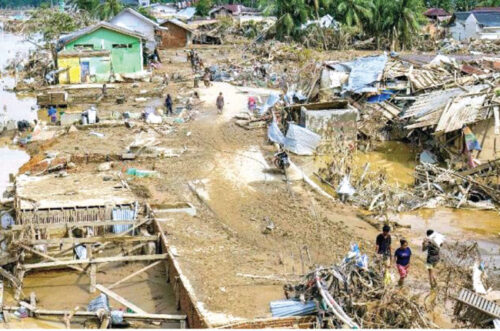
In late November 2025, Sri Lanka faced an unprecedented natural disaster that altered the lives of millions. Cyclonic Storm Ditwah, the deadliest weather event to strike the island nation since the 2004 Indian Ocean tsunami, brought catastrophic flooding, massive landslides, and widespread infrastructural collapse.
Months later, the country is still grappling with the physical and emotional scars of the storm. Here is a comprehensive look at how the disaster unfolded, its devastating impact across the hill country, urban centers, and vulnerable minority communities, and the ongoing path to recovery.
The Timeline and Scale of the Disaster
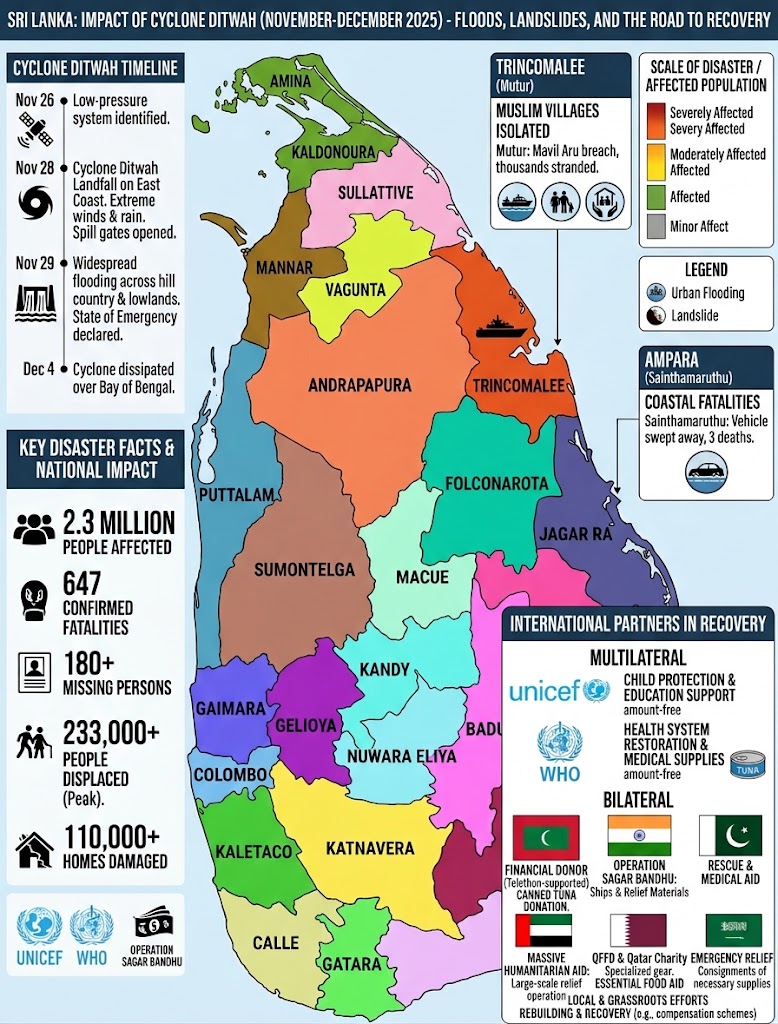
Cyclone Ditwah developed rapidly during the transition to the northeast monsoon. What began as heavy rain warnings escalated into a national emergency:
The Strike: Cyclone Ditwah made landfall on the eastern coast of Sri Lanka on November 28, 2025, unleashing extraordinary winds and relentless rainfall across the central highlands and low-lying plains.
The Scale of Destruction: The storm exposed approximately 2.3 million people to severe flooding across all 25 districts. Authorities confirmed 647 fatalities, with over 180 people reported missing, making it the nation’s deadliest natural disaster in two decades.
Infrastructure Collapse: The economic and structural toll was staggering. The World Bank estimated the total economic loss to be around $4.1 billion (Rs. 1.3 trillion).
The Heartland Hit Hardest: Kandy, Gampola, and Gelioya
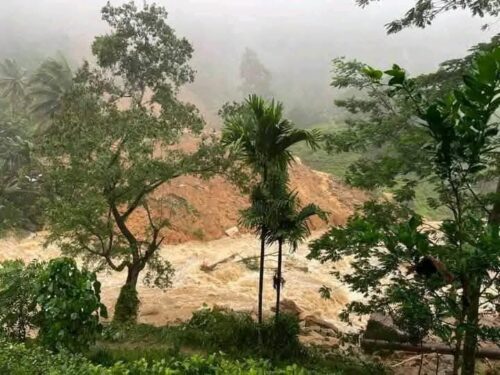
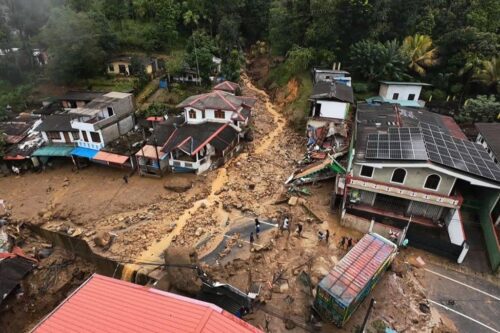
The human impact of Cyclone Ditwah was most heavily concentrated in Sri Lanka’s central hill districts, where steep terrain left communities highly vulnerable to sudden landslides and mudslides.
The Epicenter in Kandy Kandy District recorded the highest casualty rate in the country, with 234 confirmed deaths and 81 missing persons.
Paralysis in Gampola and Gelioya Intense rainfall caused the Mahaweli River and its tributaries to severely overflow.
Gelioya: The town of Gelioya was completely devastated. Floodwaters submerged homes, leaving them filled with thick, unsalvageable mud and debris. Relief workers reported that previously financially stable families were instantly pushed into crisis, losing all their belongings.
Gampola: A crucial tea-producing region, Gampola suffered massive economic blows. Widespread flooding submerged vast tea plantations, stripping tea plantation workers, factory operators, and transporters of their primary source of income.
Urban Catastrophe: The Kelani River, Kolonnawa, and Wellampitiya
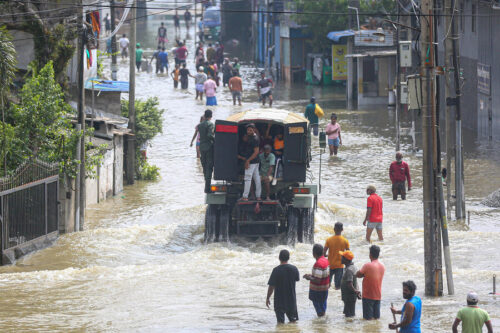
While the highlands faced landslides, Sri Lanka’s economic hubs experienced unprecedented urban flooding.
Kolonnawa’s Vulnerability: The Kolonnawa area recorded some of the highest population exposure in the entire country. The area’s dense urban development in low-lying, flood-prone zones magnified the disaster, paralyzing the commercial district and inundating critical infrastructure.
Devastation in Wellampitiya: In the Colombo suburb of Wellampitiya, residents were caught completely off guard as floodwaters rose rapidly overnight. The sudden inundation destroyed homes, ruined small machinery businesses, and washed away essential identification documents.
Impact on Muslim Villages and Coastal Communities
The flooding spared no community, deeply affecting several predominantly Muslim towns and villages in the Eastern and North-Western provinces.
Tragedy in Sainthamaruthu In the coastal town of Sainthamaruthu in the Ampara District, the sudden surge of floodwaters proved fatal. Three people lost their lives when their car was violently swept away by the raging currents.
Isolation and Rescue in Mutur In the Trincomalee District, the predominantly Muslim town of Mutur faced severe inundation when the Mavil Aru tank embankments breached. The flooding submerged access routes, effectively turning the town into an island and isolating thousands of residents.
Naval forces executed large-scale rescue operations, evacuating stranded residents to higher ground.
Families sought refuge in schools converted into temporary safety centers. Volunteer groups mobilized boats to reach these isolated shelters, delivering emergency dry rations and clean drinking water.
Across the country, Islamic mosques, Buddhist temples, Hindu kovils, and Catholic churches opened their doors to shelter displaced neighbors, reflecting a strong spirit of interfaith solidarity.
Global Solidarity: How the Recovery is Being Handled
Sri Lanka, already battling the lingering effects of an economic crisis, has leaned heavily on international aid and disaster diplomacy to navigate the aftermath.
The Maldives: A Neighbor Steps Up
In a remarkable show of regional support, the Maldives emerged as the largest financial donor to Sri Lanka’s cyclone recovery.
Financial Aid: The nation contributed a total of USD 2.4 million. While the Maldivian government provided USD 50,000, a massive national telethon named “Ceylon aaeku Dhivehin” successfully raised USD 800,000. Maldivian private businesses and the public contributed the remaining funds.
Food Rations: The Maldives also donated 14 shipping containers holding 25,000 cases of canned tuna to support immediate food relief.
The Middle Eastern Response
The diplomatic and humanitarian response from the Middle East was swift and highly impactful.
United Arab Emirates: The UAE emerged as a major contributor to the relief efforts, surprising many with the massive size and speed of its relief operation.
Qatar: The Qatar Fund for Development (QFFD) alongside Qatar Charity stepped in to provide vital search and rescue equipment to strengthen local response capabilities. They also supplied critical food aid, dry goods, and canned items targeted at 1,800 displaced families.
Saudi Arabia: The Saudi Arabian government contributed a consignment of essential relief items valued at USD 11,000.
Bilateral and Agency Support
India: As a first responder, India launched rapid relief operations, deploying naval ships—including the INS Vikrant—that delivered over 1,030 tonnes of relief materials.
Global Agencies: The UN, WHO, and UNICEF launched coordinated multi-sector responses, eventually delivering critical assistance to 575,000 of the most vulnerable people across the country.
Today, while the floodwaters have receded, the road to full recovery remains steep. Disrupted sanitation systems, massive agricultural losses, and the economic strain on displaced workers continue to pose significant challenges. Yet, driven by resilient community action and sustained international solidarity, Sri Lanka is slowly rebuilding.
Post Disclaimer | Support Us
Support Us
The sailanmuslim.com web site entirely supported by individual donors and well wishers. If you regularly visit this site and wish to show your appreciation, or if you wish to see further development of sailanmuslim.com, please donate us
 Donate
IMPORTANT : All content hosted on sailanmuslim.com is solely for non-commercial purposes and with the permission of original copyright holders. Any other use of the hosted content, such as for financial gain, requires express approval from the copyright owners.